
Known for his well-received 2022 horror flick, Barbarian, Zach Cregger returns to the genre in 2025 to again direct his own original screenplay. After a heated bidding war, Warner Bros. secured distribution rights to Weapons, which Cregger has described as a more “personal story” than his debut. Initially slated for a January 2026 release, the premiere was moved up by almost six months due to positive early test screenings – perhaps a sign of the movie’s ingenuity and broad appeal.
Though entirely a product of Cregger’s imagination, the movie starts with a child narrator stating, “This is a true story”. Establishing the grounded, mystery-driven first half of the movie, the narrator goes on to explain the premise of the tale. All but one student in a third grade class got out of bed at 2:17 am, opened the front door, and ran away into the darkness. Their teacher, just as stunned as everyone else, is soon berated by the kids’ parents looking for answers. The story then unfolds in sections – each following a different character. Their connections gradually emerge, alongside the unfolding mystery.
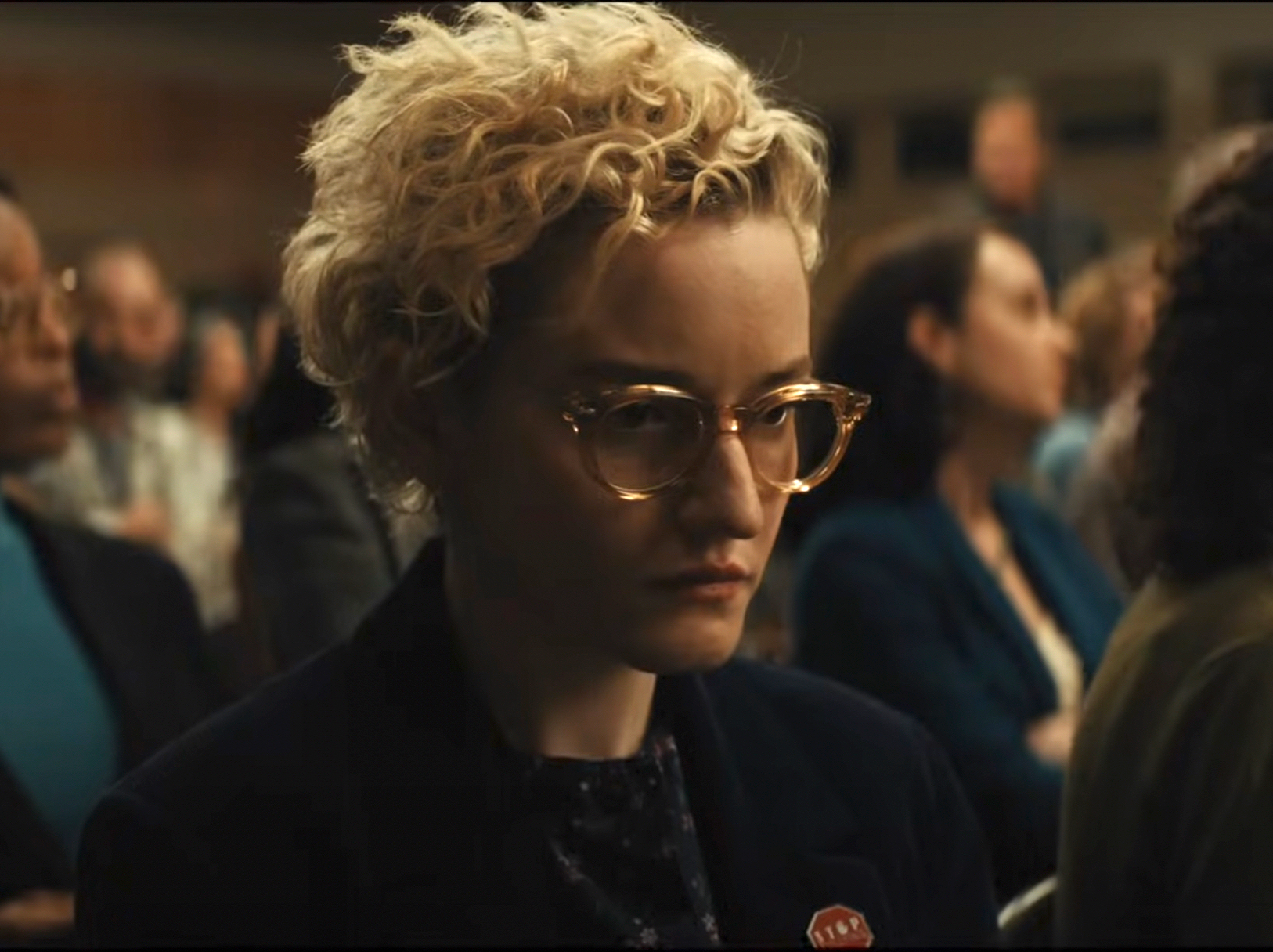
The film’s commitment to jump right into the story pays off. After establishing the children’s disappearance, the movie spends little time on the narrative setup, instead using its exposition to build up the characters. Starting with the teacher and protagonist, Justine (Julia Garner), the film initially introduces the main character as a good natured, sympathetic victim. However, she is slowly revealed to be more troubled. Still, her troubles are discovered to be grounded in understandable motives. This character setting allows us as an audience to simultaneously root for her and also question her – or at least understand why other characters question her. Further characters are shown from Justine’s perspective, seemingly making questionable decisions. But as the narrative unfolds, new information reframes these actions. I was afraid that the mosaic-style story structure would get repetitive, seeing the same events just from different perspectives. However, the filmmakers accomplish the impressive task of only overlapping the narrative when necessary – primarily delivering new knowledge that still feels essential to the story.
The movie’s core concept is its greatest strength. It starts with an idea that is just as entertaining as it is bone-chilling. The mystery is intriguingly enigmatic, carried by a fresh storytelling approach. Yet as the narrative nears its resolution, the genre shifts from a mystery to a slasher – perhaps at the cost of the film’s originality. Though Cregger excels at recycling horror tropes in novel ways, this approach still has its limits. And that limit is reached when the film gets to the point of being a full-blown slasher picture. This reimagined slasher style provides some entertaining thrills, but Weapons shines brightest when it’s leaning into the unsettling originality of its mystery. I can’t help but wish it had stayed in that space a little longer.
Cinematographer Karkin Seiple delivers such subtly interesting visuals. The movie doesn’t stray too far from the conventional horror look, but it also has its own unique appearance. In particular, the sequence of the kids running out of their houses in the opening narration was completely captivating in its mix between euphoria and unnerving perplexity. One shot would be freeing, and the next would be deeply unnerving. This continues with cinematography throughout the movie that perfectly complements whatever the movie is throwing at the audience. One moment, it’s terror-filled, then the next it’s comical, and the next, thrilling.
Zach Cregger’s Weapons flashes brilliance in its originality and creative ideas. It’s another fresh, entertaining entry in what increasingly feels like a golden age of horror.


