
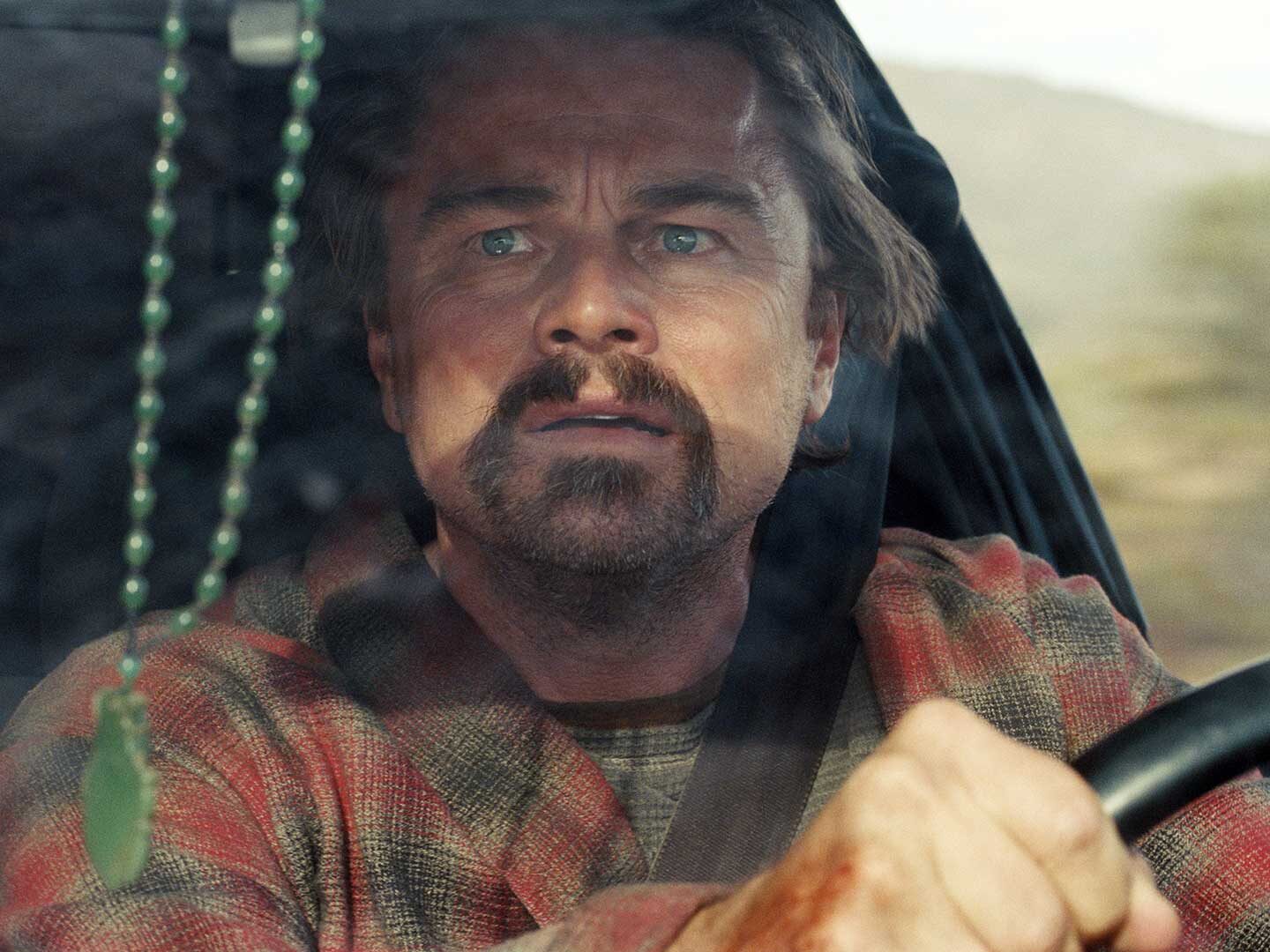
Predicated on a revolutionary group fighting for open borders and their pro-choice ideals, Paul Thomas Anderson’s latest feature, One Battle After Another is a film that’s premise seems far too risky for its $130 million budget. However, as soon as you sit down to watch the two hour and fifty minute epic, its undeniable brilliance quickly puts to rest any doubt surrounding the budget. Starring Leonardo DiCaprio, Sean Penn, Teyana Taylor, and Chase Infiniti, the film is a rich experience with ample comedy to balance its lavish visuals and truly epic narrative.
Immediately setting the tone is the film’s provocative cinematography. From the locations, costumes, and coloring all the way down to the props, blocking and shadows, every single visual element feels intentional. The entire film is interesting on the eyes – non-repetitive, but still with a consistent theme. Anderson delivers some jaw-dropping wide shots throughout the story, like one with a mountain backdrop where the scenery swallows the characters. Even the subtlest gestures are loaded with meaning. Something as simple as Infiniti’s character leaving her door open in a scene towards the end of the film is a small detail that speaks volumes about her character.
Despite depicting such an intense story, Paul Thomas Anderson laces the almost three hour runtime with surprising levity. In a full theater, Anderson’s hold over his audience was tangible. There would be maybe five to ten minutes of intense silence before a joke would fill the entire room with laughter. And this cycle would then repeat – complete silence for anything heavy duty and an auditorium full of laughter for any jokes during the lighter breaks. The comedy is much more commonplace than I had anticipated, but it still doesn’t diminish the characters. Leonardo DiCaprio and Sean Penn’s characters are especially a focus for a lot of the humor, but Anderson still shows them respect for most of the movie.
Still, what stands out most to me is how scary the movie is – not in a gory or traditional horror sense, but in its terrifying realism. The movie follows a US colonel played by Sean Penn as its main antagonist. His obsession with racism and ambition are the key characteristics of his persona. His extremism and ignorance actually provide a lot of the humor in the movie, but Anderson pairs it with a tension from his ability to succeed that makes for a frightening portrayal. His instability mirrors the very real danger of men like him. There are a number of instances where I honestly didn’t know whether I should laugh at the absurdism of his bigotry or be genuinely scared by his character’s parallels to people in real life.
This balance of menace and absurdity in Penn’s role sets the tone for the rest of the cast who each deliver distinctive, memorable performances. DiCaprio is outstanding – somehow coming off as both pathetic and magnetic. His physical comedy drew consistent laughs, but he grounds it all in raw authentic emotion. Teyana Taylor takes on the heavy lifting early on, as Paul Thomas Anderson cleverly relies on her commanding presence to draw viewers in early. As I already touched on, Sean Penn is an incredibly unnerving, yet simultaneously foolish force. Chase Infiniti comfortably plays a character based in teenage authenticity while still adding a fierceness to match the film’s vision. The supporting cast features performances from Benicio del Toro and Regina Hall that add as much intrigue as they add entertainment.
For all its strengths, the film occasionally slips into excess. A late sequence in particular feels designed more for audience satisfaction than narrative coherence, and it undercuts some of the grounded realism that makes the rest of the story so compelling. Still, this excessive force is few and far between, and it does provide extra entertainment value. It is almost reminiscent of a Quentin Tarantino work in some ways, but just feels a bit out of place in this fairly realistic story.
Overall, Paul Thomas Anderson reaffirms why he’s one of the best filmmakers alive with One Battle After Another. The film is a masterful blend of spectacle, humor, and symbolism – a reminder that bold risks and large budgets, in the right hands, can create unforgettable cinema.


